Body Sculpting & Deep Tissue Tools
Best Body Sculpting & Deep Tissue Tools (2026)
Updated 2026 · 8 min read · 6 products reviewed
Manual body tools occupy a sweet spot that powered massagers miss: full control over pressure, zero charging, and techniques borrowed directly from professional practice. Wood therapy rollers descend from maderotherapy traditions, steel muscle scrapers are the consumer version of the IASTM instruments physical therapists use, and massage sticks remain the most portable serious recovery tool an athlete can carry.
The honest framing matters here. No manual tool permanently removes cellulite — what consistent massage genuinely does is boost local circulation, support lymphatic flow, and temporarily improve skin texture and puffiness. Deep tissue tools, meanwhile, have stronger footing: sustained pressure and scraping techniques measurably help muscle recovery, adhesions, and range of motion.
We selected tools that do real mechanical work, from a nine-roller massage stick for post-workout legs to a dry lymphatic brush gentle enough for daily facial use. Each earns its spot by being effective enough to keep using — because in this category, consistency is the entire mechanism.
Quick Comparison
| Product | Best For | Key Feature | Top Con | Link |
|---|---|---|---|---|
| YANSYI Professional 9-Roller Deep Tissue Massage Stick | Post-workout muscle recovery for legs and arms | Nine independent rollers for controlled deep tissue work | Awkward to reach your own upper back | View → |
| MZDXJ Wooden Cellulite Massage Roller (12 Wheel) | Wood-therapy style massage for thighs and legs | Twelve-wheel maderotherapy design for broad coverage | Intense sensation until skin adapts | View → |
| TESMED Cellulite Manual Massager Roller | Targeted thigh and buttock massage with refined ergonomics | Clinically tested kneading roller geometry | Premium price for a manual tool | View → |
| BYYDDIY Stainless Steel Gua Sha Muscle Scraper | IASTM-style muscle scraping and scar tissue work | PT-grade stainless steel scraping edges | Requires learning proper technique | View → |
| Lymphatic Contour Face Brush | Quick daily facial depuffing and lymphatic drainage | Dry-brush format for no-prep lymphatic massage | Subtler effect than gua sha tools | View → |
| Birth Comb & Acupressure Massage Ball Set | Labor comfort and palm/foot acupressure | Counter-pressure comb grip for contraction management | Niche primary purpose | View → |

YANSYI Professional 9-Roller Deep Tissue Massage Stick
A nine-roller massage stick that lets you control exactly how much pressure hits quads, calves, and back — the portable alternative to a foam roller that actually fits in a gym bag.
Strengths
- Independent rollers contour around muscle groups
- You control pressure precisely with both hands
- Compact enough for travel and gym bags
Considerations
- Harder to use on your own upper back
- Rollers can pinch if used over bare skin quickly
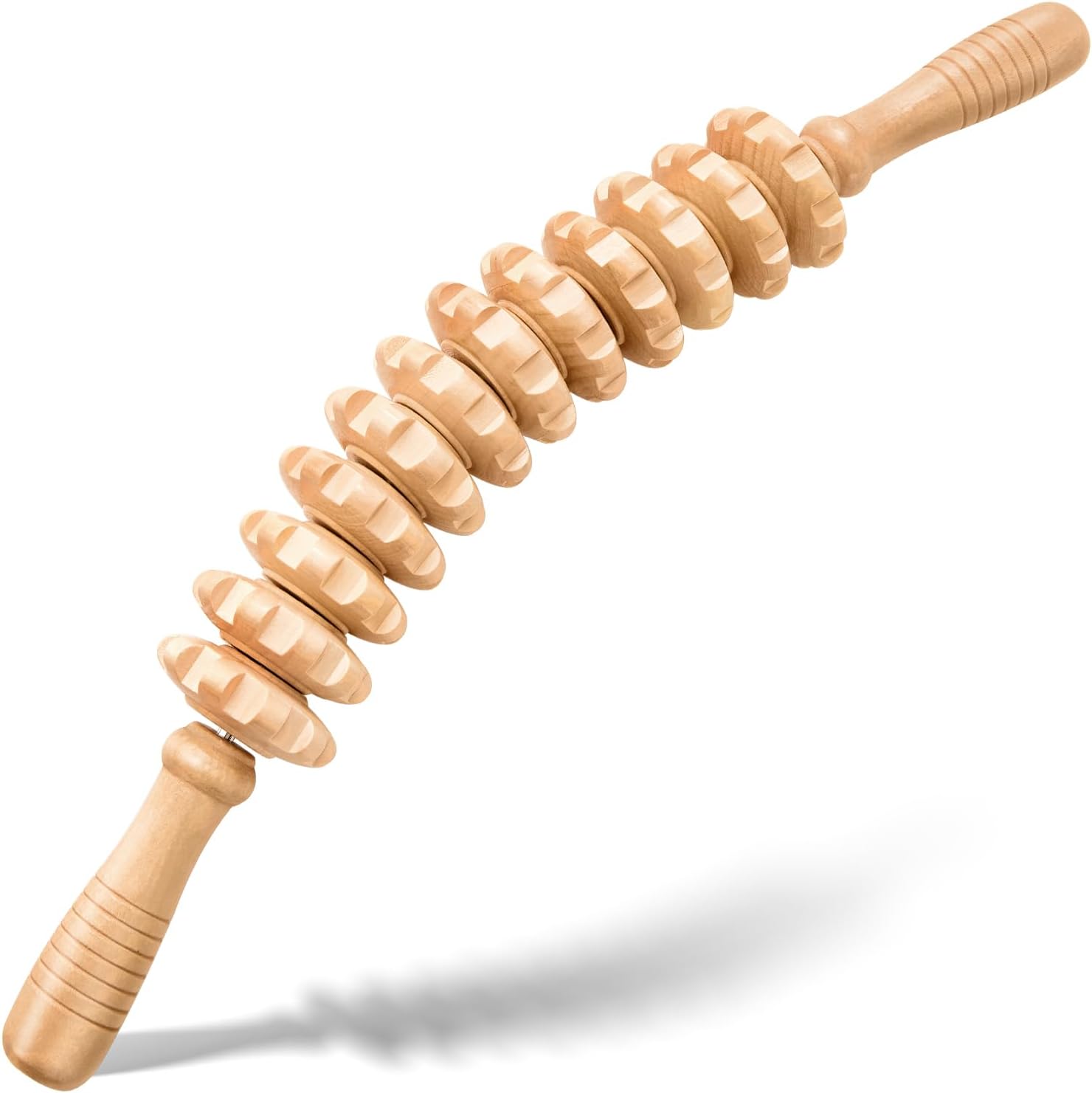
MZDXJ Wooden Cellulite Massage Roller (12 Wheel)
A twelve-wheel wooden roller in the maderotherapy tradition — spiked wheels that knead thighs and legs deeply for circulation, lymphatic flow, and smoother-looking skin.
Strengths
- Twelve spiked wheels cover large areas fast
- Natural wood construction with solid grip
- Works well with massage oil for maderotherapy-style sessions
Considerations
- Spiked wheels feel intense on first use
- Results on cellulite appearance require consistent use
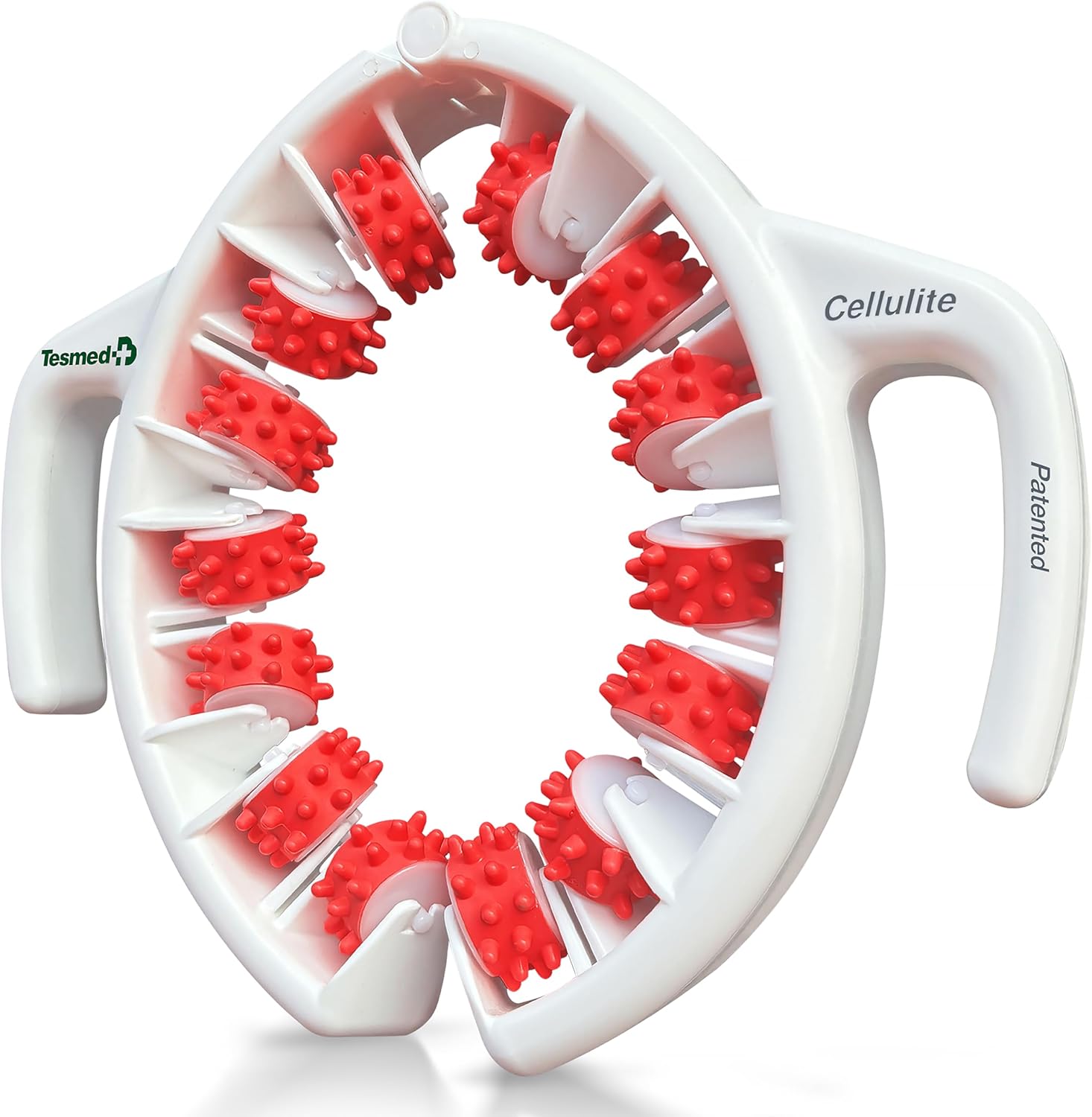
TESMED Cellulite Manual Massager Roller
An Italian-designed manual cellulite massager with a clinically tested roller geometry that kneads thighs and buttocks — the most refined tool in this category.
Strengths
- Clinically tested design, not a generic mold
- Ergonomic handle reduces hand fatigue
- Kneading action is deep but controllable
Considerations
- Costs more than generic rollers
- Smaller coverage area per pass than multi-wheel tools

BYYDDIY Stainless Steel Gua Sha Muscle Scraper
A 304 stainless steel IASTM-style muscle scraper — the same class of tool physical therapists use for soft tissue work, scar tissue, and stubborn muscle adhesions.
Strengths
- Professional IASTM tool class at consumer price
- Non-magnetic 304 steel is durable and easy to sanitize
- Beveled edges suit large and small muscle groups
Considerations
- Technique matters — worth watching tutorials first
- Too aggressive for facial use

Lymphatic Contour Face Brush
A soft-bristle contour brush designed for dry lymphatic massage on the face — a gentler, faster alternative to gua sha for morning depuffing and jawline definition.
Strengths
- Dry brushing needs no oil or prep
- Bristles are gentle enough for daily morning use
- Faster full-face routine than gua sha
Considerations
- Lighter effect than stone or steel tools
- Bristles need regular washing and drying

Birth Comb & Acupressure Massage Ball Set
A birth comb and spiked acupressure ball set built for labor comfort — gripping the comb's teeth against palm pressure points is a time-tested counter-pressure technique for contractions.
Strengths
- Comb grip targets palm acupressure points during contractions
- Spiked ball works for back counter-pressure in labor
- Useful beyond birth for everyday hand and foot acupressure
Considerations
- Very specific primary use case
- Comfort effect varies person to person
Buying Guide: Body Sculpting & Deep Tissue Tools
How to Choose Body Sculpting & Deep Tissue Tools
Know What Each Tool Class Actually Does Massage sticks and rollers work muscle tissue — recovery, soreness, and circulation. Wood therapy (maderotherapy) rollers add skin-kneading action aimed at circulation and the temporary appearance of smoother skin. Steel scrapers (IASTM-style) target fascia and adhesions with focused edge pressure. Lymphatic brushes are the gentlest class, encouraging fluid drainage rather than working tissue.
Buy for the problem you have: sore muscles want a stick or scraper; puffiness wants lymphatic work; skin-texture goals want a kneading roller plus realistic expectations.
Pressure: Deep Is Not Always Better Effective deep tissue work sits at "strong but breathable" — around 6–7 out of 10. Bruising, sharp pain, or soreness lasting more than a day means too much pressure, not more effectiveness. Lymphatic work is the opposite extreme: the lymph vessels sit just under the skin, so feather-light strokes outperform firm ones.
Wood vs. Steel vs. Bristle Wood rollers are warm to the touch, grippy with oil, and suited to broad kneading strokes. Steel holds an edge for precise scraping and sanitizes completely between uses. Bristle brushes are for dry lymphatic work only — never scrub hard enough to redden skin. All three coexist happily in one routine serving different jobs.
Realistic Timelines Muscle recovery benefits are immediate — you feel looser after one session. Circulation and skin-appearance changes from kneading rollers take four to eight weeks of consistent use, several sessions weekly. Any product promising permanent cellulite removal is overpromising; improved appearance with maintained use is the honest ceiling.
How We Evaluate Body Sculpting & Deep Tissue Tools
Tip: Photograph your skin or nails in consistent lighting weekly to track progress objectively. Four weeks of consistent use is the minimum evaluation period for most devices.
Note: Clean your device after every session. Residue buildup on heads and surfaces can harbor bacteria and reduce performance over time.
Frequently Asked Questions
Do cellulite massage rollers actually work?
They temporarily improve the appearance of skin by boosting local circulation and fluid movement, and consistent use maintains that effect. They do not remove cellulite permanently — cellulite is a structural feature of how fat and connective tissue interact, influenced heavily by genetics. Treat rollers as maintenance tools, not cures.
What is muscle scraping (IASTM) and is it safe at home?
Instrument-assisted soft tissue mobilization uses a beveled tool edge to apply focused pressure along muscles and fascia, helping with adhesions, scar tissue, and range of motion. At home, it is safe with light-to-moderate pressure along the muscle direction, avoiding bony prominences, the spine, and the front of the neck. Mild redness is expected; bruising means excessive pressure.
How is lymphatic drainage massage different from deep tissue massage?
They are opposites in pressure. Lymphatic vessels sit just beneath the skin, so drainage work uses feather-light strokes directed toward lymph node clusters — below the ears, at the collarbone, in the armpits and groin. Deep tissue work targets muscle with firm, sustained pressure. Using deep pressure for lymphatic goals is counterproductive.
How often should I use a wood therapy roller?
Three to five sessions weekly of 5–10 minutes per area is the typical cadence for circulation and skin-appearance goals. Always roll toward the heart, use body oil for slip, and start with light pressure — skin adapts over the first two weeks. Skip any area with varicose veins, broken skin, or active inflammation.
Is a massage stick better than a foam roller?
They overlap heavily; the difference is control. A stick lets you dose pressure with your hands and target calves, quads, and forearms precisely, and it travels far better. A foam roller uses body weight, which suits large areas like the back but makes fine pressure control harder. Athletes often keep both.
What does a birth comb actually do during labor?
Gripping a comb so its teeth press into the palm engages the gate-control mechanism — competing pressure signals that reduce perceived contraction pain — plus an acupressure point at the base of the fingers. It is a low-cost, drug-free comfort technique widely recommended by doulas. Evidence is largely experiential, but the cost and risk are near zero.
Further Reading